
Development of New Materials Based on New Metal Additive Manufacturing Technology
 Specially Appointed ProfessorAkihiko Chiba
Research Overview
This project aims to establish the fundamental science of metal powder materials and powder melting and sintering processes, while developing novel materials utilizing ultra-high-temperature rapid solidification. In addition, an integrated metal additive manufacturing technology will be developed by combining in-situ monitoring and AI-driven feedback control based on real-time build data. Furthermore, by integrating electron beam additive manufacturing, PREP-based powder production, powder recycling processes, and powder health diagnostics, this project will construct a highly reliable AM platform in which powder, process, and quality are designed in an integrated manner.
Research Features
This research is characterized by the establishment of defect-free metal additive manufacturing based on “in-process quality assurance,” which integrates in-situ monitoring with feedback control to detect and correct defects in real time during fabrication. In particular, multi-spot scanning electron beam additive manufacturing significantly improves both build accuracy and productivity compared with conventional methods. Furthermore, autonomous control integrating AI and process data will enable fully automated next-generation AM technologies. In addition, the advancement of PREP technology and powder diagnostics will suppress material-originated defects and promote the development of novel materials, thereby establishing an innovative manufacturing platform applicable from terrestrial industries to space environments.
Expected Outcomes and Developments
This research is expected to realize “in-process quality assurance” by integrating in-situ monitoring with feedback control, enabling real-time detection and correction of defects and thereby establishing defect-free metal additive manufacturing. As a result, product reliability and reproducibility will be significantly improved, contributing to expanded applications and enhanced competitiveness in high-reliability industries such as aerospace, energy, and medical sectors. Furthermore, improvements in the precision and speed of electron beam additive manufacturing will enhance productivity and reduce manufacturing costs. In addition, the advancement of high-performance powder production using the PREP method, combined with powder diagnostics, will enable the suppression of material-originated defects and accelerate the development of new materials. In the future, process autonomy and full automation will enable manufacturing in remote and unmanned environments, with potential applications extending to lunar and Martian settings. These outcomes are expected to have broad impacts not only on related industries but also on academic fields such as materials science, process engineering, and data science.
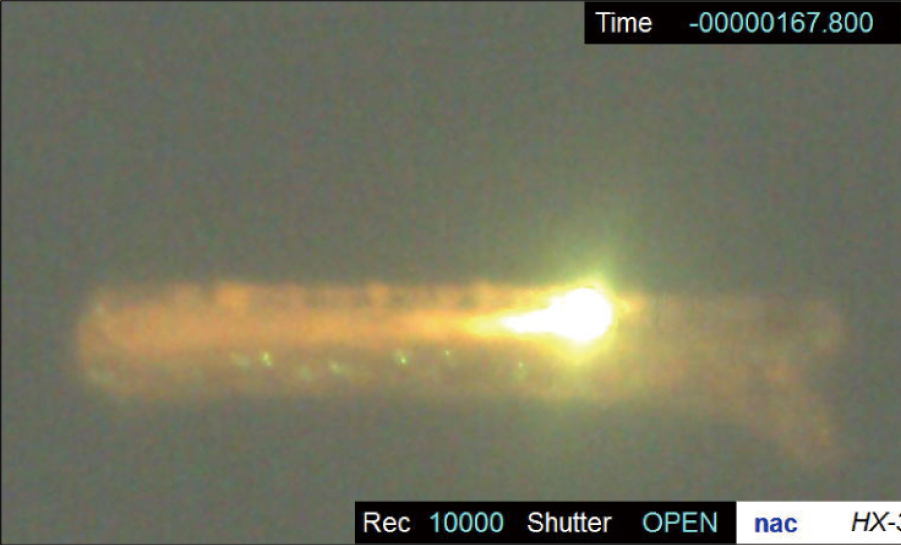
Formation of molten pools of metal powder by electron beam
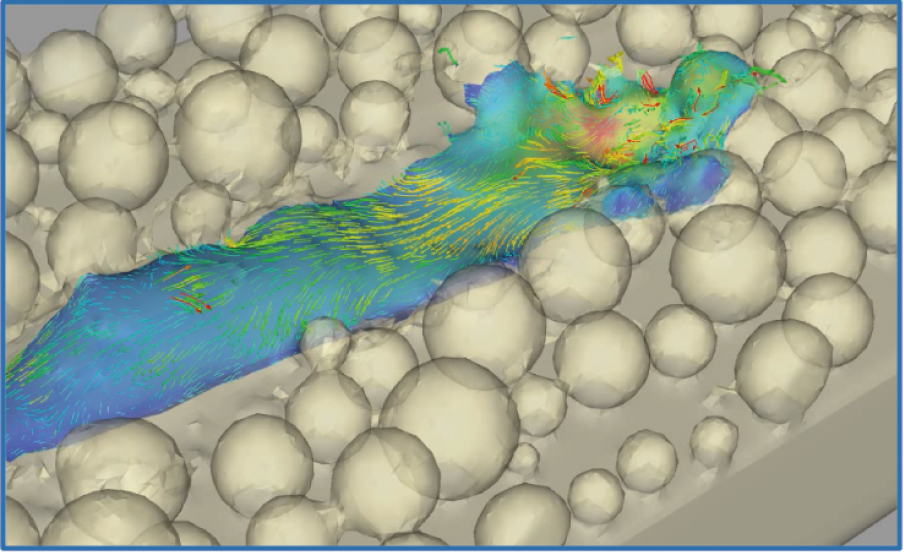
Melt pool formation behavior by computational thermo-fluid analysis